
Jon Gindick has died. I found out from Winslow Yerxa.
To many, he was a harmonica teacher, a blues camp leader, and a promoter of music born from Black suffering and survival. He truly experienced joy when making music, and he shared that joy with thousands of people. That is a good thing, and many will remember him for that. But he was also unabashed about his toxic views while he was alive, so we are going to talk about them now that he is dead.
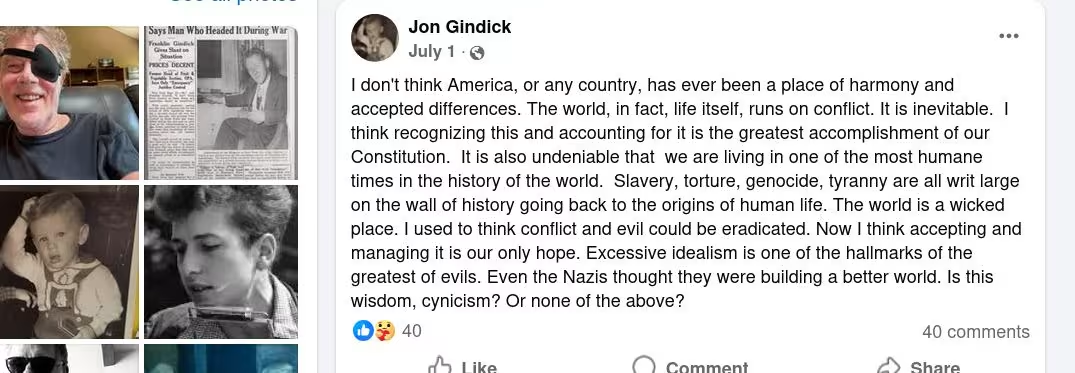
On July 1, the very day US Congress passed Trump’s “One Big Beautiful Bill,” unleashing billions for ICE, mass deportations, detention centers, and profit-driven cruelty, Jon posted that we are living in “one of the most humane times in the history of the world,” dismissing slavery, torture, genocide, and tyranny as things “writ large on the wall of history.”
His privilege spoke louder than his harmonica. To him, slavery was history, not prison labor and migrant exploitation. Torture was an ancient crime, not ICE cages, CIA black sites, and the slow violence of keeping entire nations poor for American profit. Genocide was a thing of the past, not the bombs falling on Palestine with U.S. weapons and U.S. approval. Tyranny was an abstraction, not the reality of Donald Trump, the patent tyrant he cheered on.
Jon could play the blues, but he never listened to them. He could teach others to reproduce the sound of Black pain, but he refused to recognize that pain in the present tense. His privilege blocked the critical thinking needed to connect the dots. In his world, America was humane, because America was humane to him. And when pressed, he defended himself by showcasing how generous he was to Black people.
Tell me you are racist without saying you are racist.
So let us be clear. Jon Gindick will be remembered for teaching music. But he will also be remembered for excusing cruelty, erasing history, and denying reality. His harmonica bent notes, but his worldview bent truth.
May his students remember the music. May history remember the cowardice. And may Jon Gindick rest not in peace, but in the discomfort of the truths he refused to face.