
A couple notice their neighbors outside arguing in the driveway. One raises their voice, the other turns around and walks back into the house. It lasts maybe thirty seconds. That’s all it takes.
Thirty seconds and boom, we’ve got a verdict.
One person in the observing couple reacts instantly. Case closed. Walks away? That tells them everything they need to know. Bad person. Cold. Cruel. Must be a nightmare to live with.
One tiny clip from the movie and they’re already writing the review. Five stars for certainty, zero stars for curiosity.
The other person looks at the same thing and goes, hold on. We saw almost nothing. We don’t know what that argument was about. We don’t know what happened five minutes earlier or five years earlier.
Maybe walking away was the smartest thing that happened in that driveway all day. Maybe staying would’ve turned it into something worse. They’re not excusing it. They’re just refusing to pretend they’ve seen the whole truth because they caught a glimpse through the bushes.
That’s the difference right there.
It’s not about being nicer or more moral. It’s about how fast you slap meaning onto things. One way crushes a complicated situation into a neat little label and feels very proud of itself. The other keeps the picture open and admits that most of what drives human behavior never shows up in a quick public moment anyway.
Now take that same habit of thinking and zoom it way out.
A lot of people in the United States are starting to wake up to the long, ugly pattern of US imperialism and the way the West invents reality and manufactures consent for war. What’s changing isn’t access to information. We’ve had information for decades.
What’s changing is how people are learning to look at it.
This whole system works because the news is designed to hit you fast and hard. Here’s the bad guy. Here’s the crisis. Here’s the threat. Feel something right now.
Be scared. Be angry. Be morally certain. Then move along. No time to ask questions. No time to think.
Reaction first, understanding never.
Almost every major news story does this. Sometimes they’re subtle, sometimes they’re clumsy, but the goal is the same. Strip away context. Chop off history. Make everything look isolated and accidental.
Never let you ask who benefits. Never let you notice what else is happening at the same time. Definitely don’t let you connect the dots. That’s dangerous.
But when people stop reacting on command and slow the hell down, the magic trick stops working. Patterns start to show up.
You notice whose suffering is treated like background noise. You notice how certain kinds of violence are framed as tragic but necessary, while others are framed as unforgivable evil.
Funny how that works.
What’s happening isn’t about learning new facts. It’s about refusing to let each story pretend it’s the whole story. It’s about keeping the frame open long enough to see power moving around, instead of swallowing the version of reality that just happens to flatter the people already running the show.
And if you want a few basic tools for cutting through the fog, here they are.
- First, it’s about power. Not oil. Not money. Power. Oil and money only matter because they give someone leverage.
Take Venezuela. Everyone talks like the fight is over who gets to own the oil. That’s cute. Ownership is optional. Control is the prize.
If you can box it in, choke it off, delay it, sanction it, you don’t need to pump a single barrel yourself. You just keep prices high and alternatives scarce.
And here’s the beautiful part. They can step back and say, “You know what? We’re gonna leave it in the ground. It doesn’t belong to us.” See? Look at that. Moral. Responsible. Good people.
Meanwhile, leaving it right where it is happens to be the move that benefits them the most. Prices stay high, leverage stays intact, and nobody has to look like the villain. That’s power. Quiet. Indirect. Smiling for the camera.
Meanwhile nobody cares that Venezuelans will continue to suffer, business as usual. Their only crime is having oil.
- Second, dehumanization is always a red flag. Anytime a news story keeps nudging you to see a group of people as dangerous, irrational, or less than human, your alarm bells should be screaming.
Fear is incredibly useful.
Once people stop seeing others as fully human, empathy goes right out the window and suddenly atrocities turn into policy decisions. That framing isn’t accidental. It’s doing a job.
So here’s a little mental trick. The next time you catch yourself believing in the boogeyman, stop.
Reverse the thought.
Say to yourself, “This could be anybody under the same conditions.”
Sit with that for a second.
Wait for it.
“Holy shit. This could be *me* under the same conditions.”
What if all I ever knew was poverty and violence because I grew up in a place that was devastated by war.
Someone else's war. I'm hated by people who don't even know me, but they were given a story about people like me.
Have you ever heard that kind of story on the news?
- Third, ridicule is information. When you start questioning a narrative and the response isn’t an argument but mockery, dismissal, or bullying, congratulations. You hit a nerve.
Power doesn’t panic when you’re wrong. It panics when you’re close. When the conversation shifts from debate to sneering, that’s usually your cue to keep digging, not to shut up.
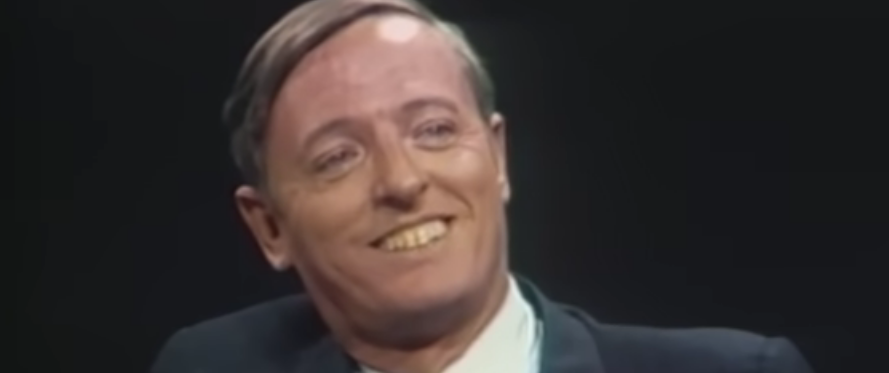
That shit-eating grin might make you angry at first. Good. Don’t float above it. Don’t calm down.
Don’t retreat into politeness.
Hit them with facts.
In French, there’s a phrase for that kind of face, une face à taper dedans, a slappable face.
So slap it.
Not with fists, with context. With empathy. With evidence. Slap it until the smugness cracks and something real has to come out.
Because part of that grin is cognitive dissonance. It's discomfort. It's hard to pivot to a new set of facts. It's extra hard because not only do you feel ignorant for not having seen it before, but coming to terms with the realities of imperialism means you're not the good guy anymore.
We're not.
That discomfort is healthy. We should all learn to be able to sit with some discomfort.
Because when we take it away, when we people-please, when we avoid being disagreeable, we place comfort above truth. And we already know how catastrophic avoiding the truth can be.